Electrical diagnostics
Fault finding is a service in its own right, and it is the part of most calls that takes skill. The symptom tells us where to start; the meter tells us where to go next. Voltage, current, continuity and insulation are measured in a deliberate order so that the search stays short and nothing is opened that does not need to be.
Includes: readings at the panel and at the affected devices, isolating the circuit, and a plain statement of what the fault is and what fixing it involves. If the repair is small, it is usually done in the same visit. If it is larger, you get the scope first.
When you need it: anything intermittent, anything that affects more than one room, any symptom you cannot connect to a single device, and any time a previous fix did not hold.
What changes the scope: whether the fault is intermittent, how many boxes are on the circuit, and access to the panel and the wiring.
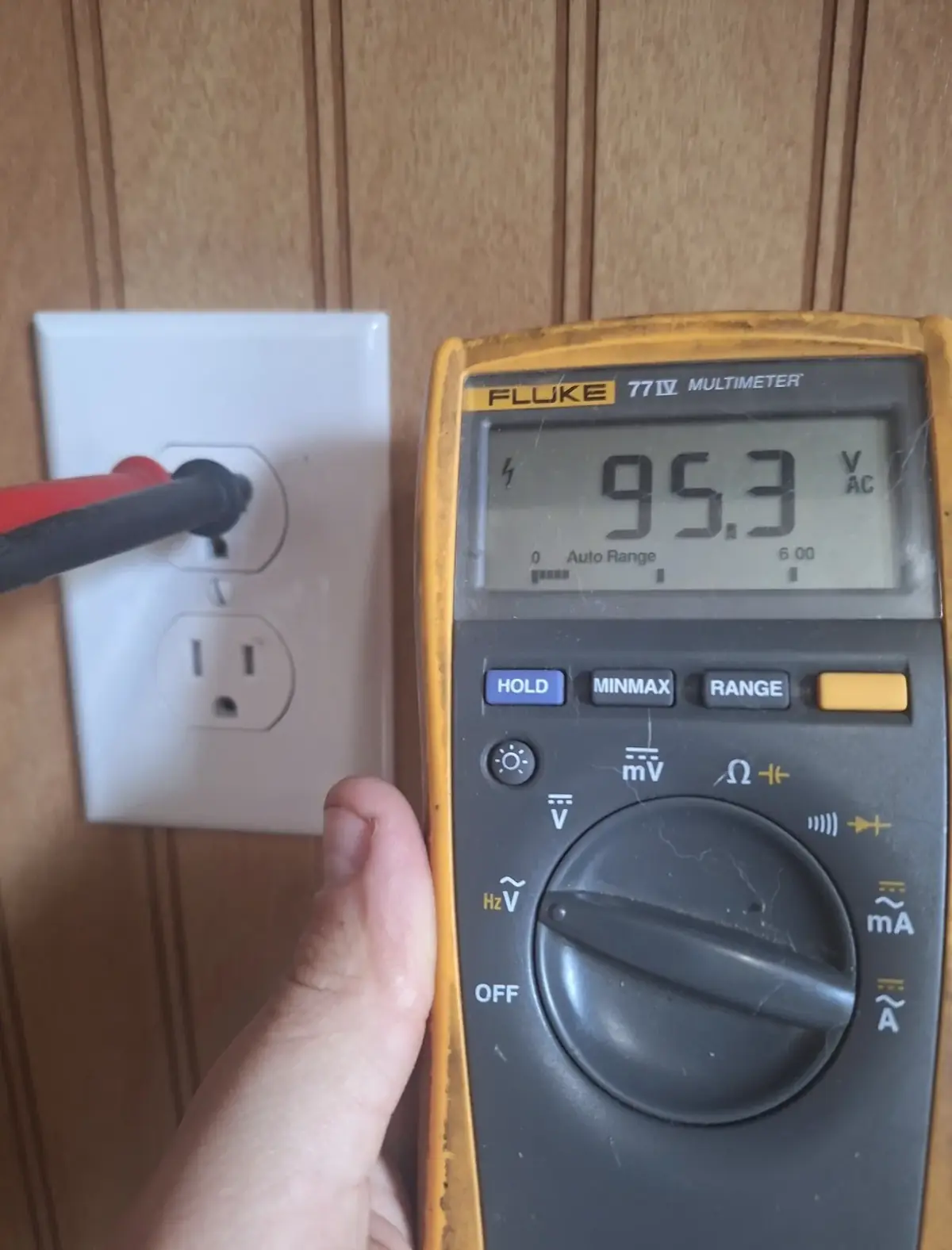
Repairs
Breaker and fuse problems, dead outlets and switches, light and fixture faults, and the safety-related repairs that follow a warm device, a buzz or a shock. Each one has its own section on the electrical repairs page, with the usual causes and what affects the size of the job. The short version: the cause is found before the part is replaced, and the circuit is tested under load afterwards.
Breakers and fuses
Repeated trips, breakers that will not reset, blown fuses, worn or mismatched breakers.
Outlets and switches
Dead, loose, warm or intermittent devices; GFCI and tamper-resistant replacements.
Lights and fixtures
Flicker, buzz, failed drivers, dimmer mismatches, exterior fixtures letting in water.
Safety-related
Hot devices, panel noise, shocks, missing GFCI protection, expired alarms.
Small installations
The jobs that come up alongside repairs. Each is a single visit in most houses.
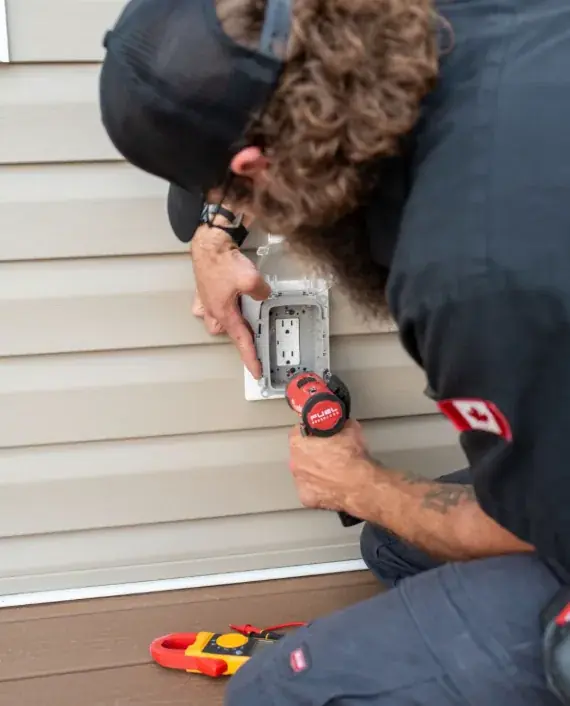
Exterior receptacles
A weatherproof outlet where you need one outside: for the barbecue, holiday lights, a pressure washer or a car heater. GFCI-protected, mounted in a weatherproof box with an in-use cover, fed from a suitable circuit. The photo on the home page shows one going in on vinyl siding.
Scope depends on distance from the nearest circuit or the panel, and whether the wall is siding, brick or stucco.
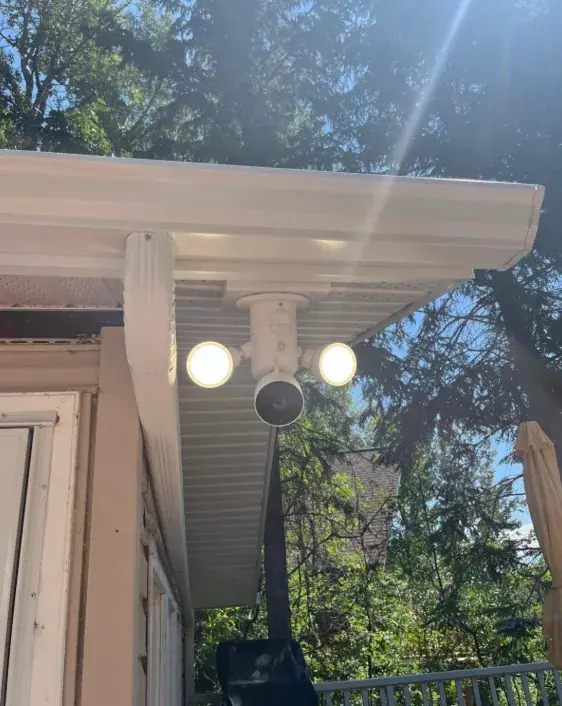
Security floodlights and exterior wall lights
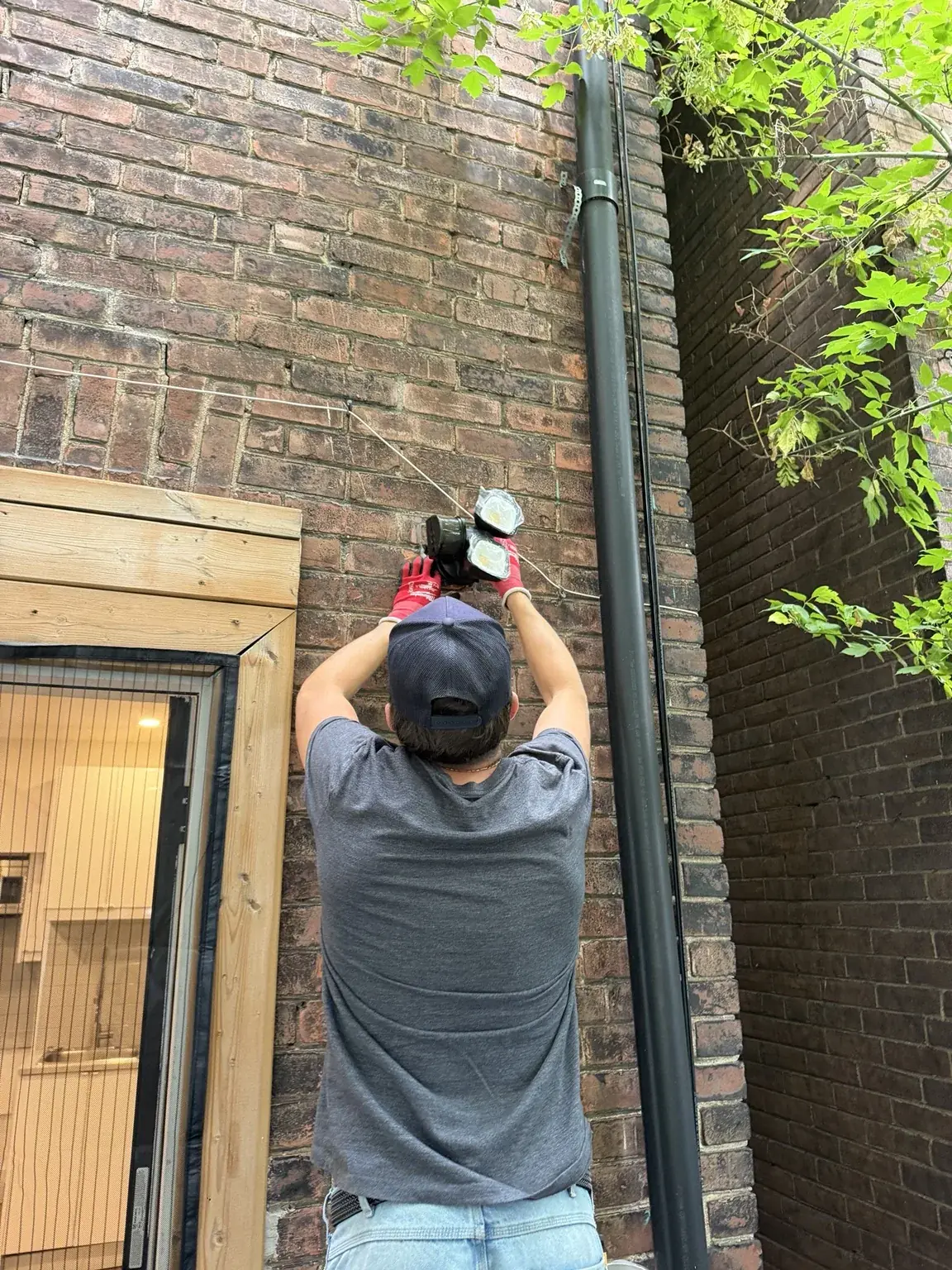
Motion or camera floodlights under a soffit, wall lanterns beside a door, a light over the garage. The fixture is mounted to a proper box, sealed against the weather, and switched or sensor-controlled as you want it. Fixtures outdoors have to be wet-rated.
Scope depends on whether a box and switch leg already exist, mounting height, and the wall material. Brick takes longer than siding.
Interior lighting and pot lights
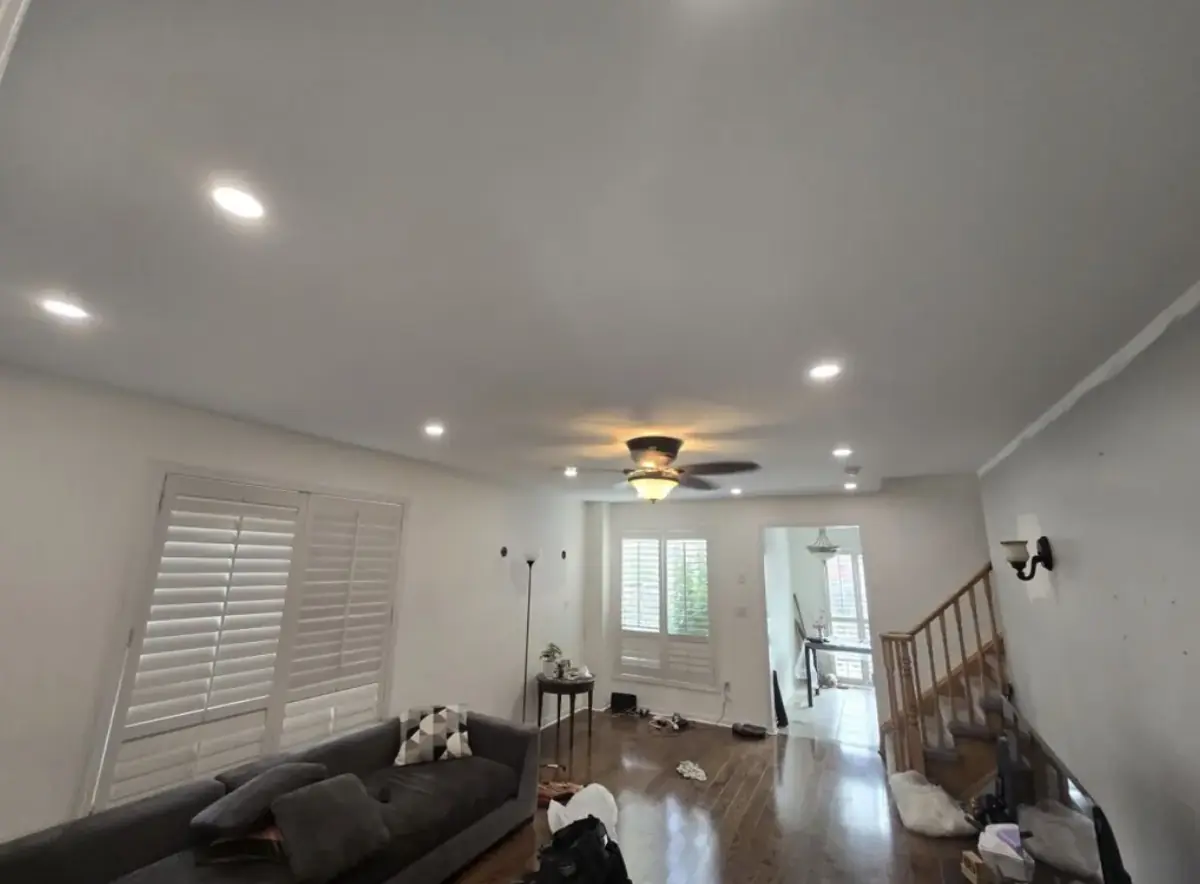
Replacing a fixture, adding a dimmer that actually suits LED lamps, or laying out recessed lights across a room. Housings in insulated ceilings are IC-rated, and the switching is planned before any hole is cut so the layout is what you expected.
Scope depends on ceiling access from above, the number of fixtures per switch, and whether existing wiring can be reused.
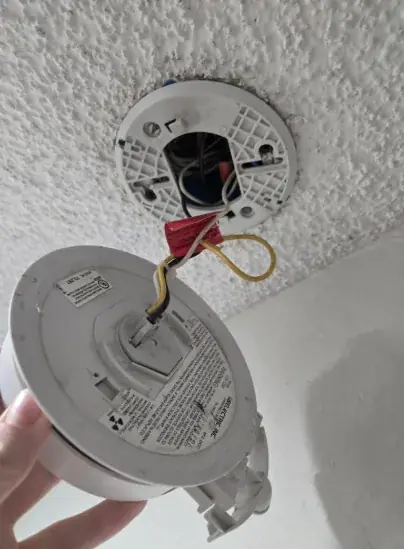
Smoke and carbon monoxide alarm replacement
Hardwired alarms are replaced on the existing wiring with units that interconnect, so they all sound together. The replacement date on the back of each alarm is the reason to call; most have a ten-year life. Where an alarm is missing from a floor that should have one, that is added.
Scope depends on how many alarms there are and whether the existing harness and box are in good condition.
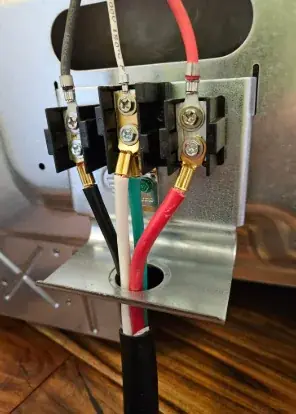
Dryer, range and appliance connections
Connecting a new dryer or range to the existing receptacle or terminal block with the correct cord, strain relief and bonding for the appliance and the outlet type in your house. Three-wire and four-wire configurations are handled correctly rather than forced to fit.
Scope depends on whether the existing receptacle matches the appliance, and the condition of the circuit behind it.
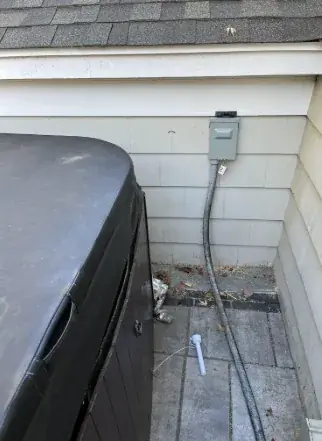
Hot tub disconnects
A hot tub needs a GFCI-protected disconnect within sight of the tub and a properly sized feed from the panel. The work covers mounting the disconnect, running the conduit and conductors, connecting the tub's control pack, and the notification to the Electrical Safety Authority that this kind of job requires.
Scope depends on the tub's electrical requirements, distance from the panel, and whether the panel has the capacity and space for the circuit.
What a visit includes
- The diagnosis, explained in words you can repeat to someone else.
- The repair, done to the Ontario Electrical Safety Code with the right device, wire gauge and breaker rating for the circuit.
- A test under load before we leave, so the fix shows in a reading, not just in a working light.
- Updated labels at the panel for anything we touched.
- A short summary of what was found, what was done and anything worth keeping an eye on.
If your job is not on this page, describe it anyway. If it is not something we take on, we will say so rather than guess at it.
Service questions
Can I supply my own fixture or device?
Usually, as long as it carries a Canadian certification mark (cUL, CSA or similar) and suits the location: damp-rated for a bathroom, wet-rated outdoors. Tell us the model when you request service so the right box, bracket and switch can be planned.
Which jobs need an ESA notification?
Like-for-like device replacement typically does not. New circuits, hot tub wiring, panel work and anything that adds load does, and the inspection that follows is part of the job, not an extra.
Do you work in condos and rentals?
Yes, with the owner's or property manager's agreement where that applies. In condos, work past the unit's panel is usually the building's, and we tell you where that line falls.