A repair starts with the cause
Swapping the part that failed is the easy half of a repair. The useful half is finding out why it failed, because a breaker, outlet or fixture that gave up usually did so for a reason that is still there. So every repair on this page begins with the same step: measure the circuit, locate the fault, then replace what needs replacing.
What follows is written for Etobicoke houses as we find them: post-war bungalows and side-splits with original wiring, townhouses with builder-grade devices that have loosened over the years, and basements finished in stages by several different hands.
Breaker and fuse problems
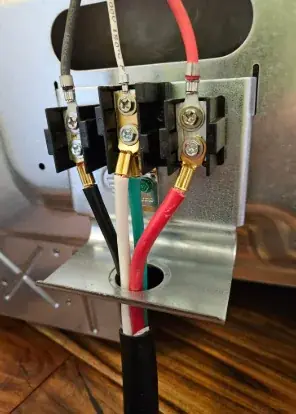
A breaker trips to protect the wiring, not the appliance. When one trips repeatedly, the job is to find what it is reacting to. We unplug the circuit, measure current with everything back on, and test for shorts and ground faults until the cause is isolated to a device, a cable or a connection.
Usual causes: an overloaded circuit (a space heater and a kettle sharing one 15 A kitchen circuit is enough), a short in a cord or appliance, an arc fault from a loose connection that an AFCI breaker picks up, or a breaker that has worn and trips below its rating.
Fuses: a fuse that blows repeatedly means the same thing as a tripping breaker. A fuse that has been replaced with a larger one, or bypassed, is a hazard and is corrected first.
What changes the scope: how many devices share the circuit, whether the fault is at a device or inside a wall, and whether the breaker itself has to be replaced with the matching type for the panel.
Before we arrive
Leave a breaker that has tripped twice in the off position. Note what was running when it went and roughly what time it happens. Clear about a metre in front of the panel so it can be opened safely.
Dead outlets and switches
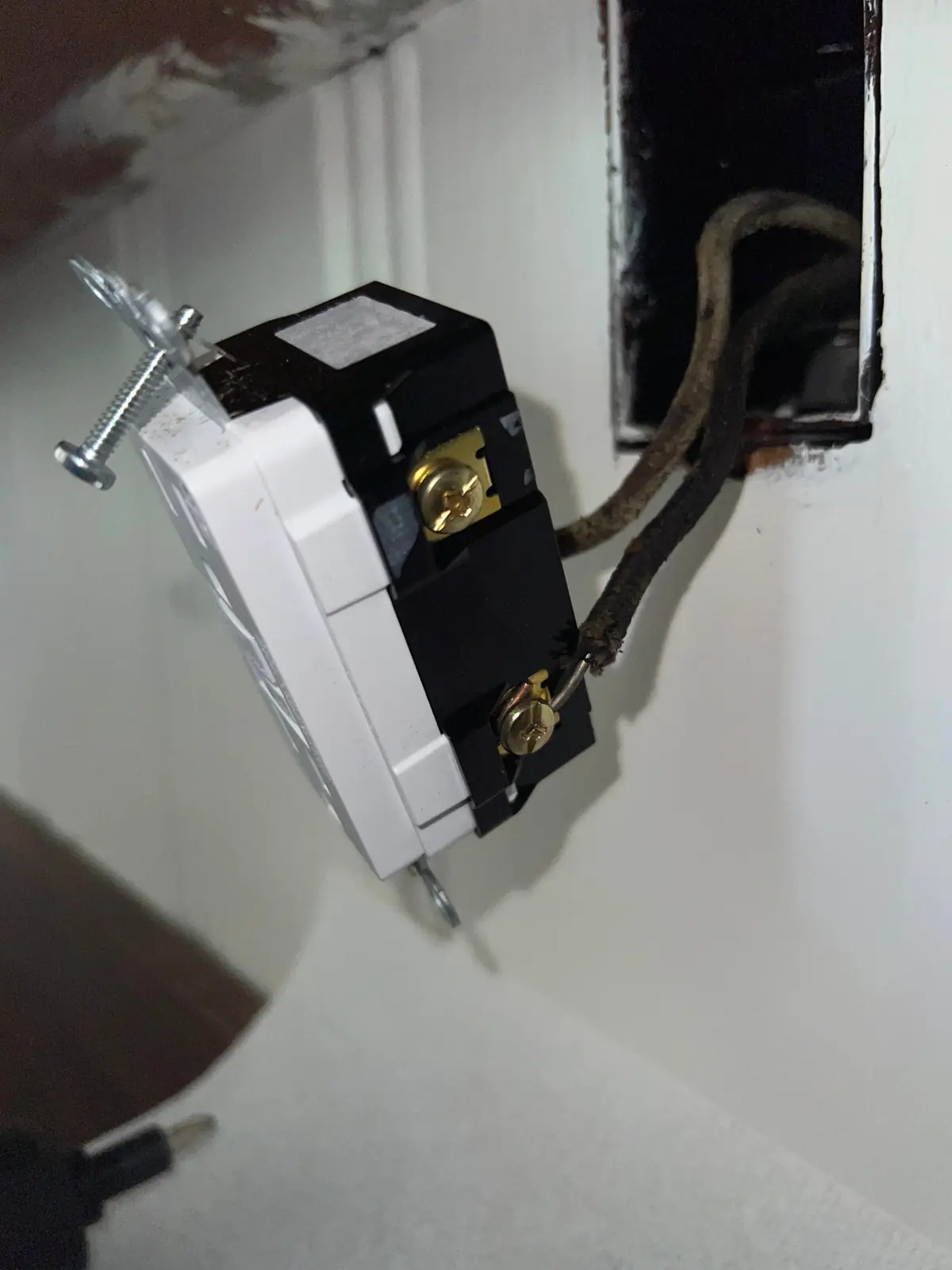
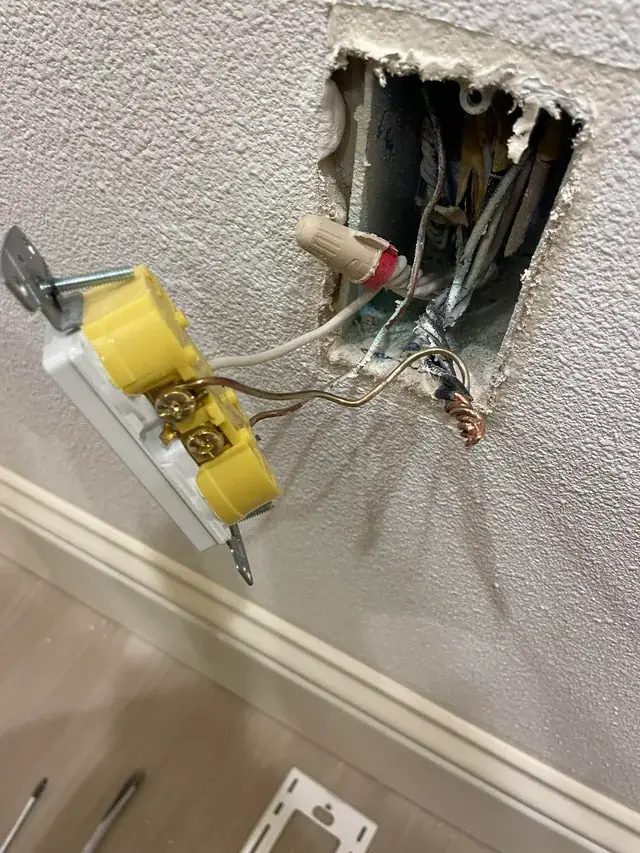
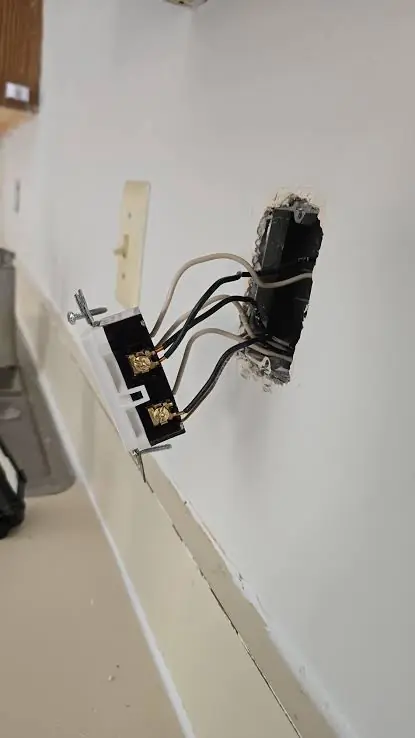
An outlet with no power, a switch that does nothing, a plug that no longer grips, a device that is loose in the wall. The repair is usually straightforward once the fault is located; the locating is the work. A dead outlet is often fed through another box, and the loose or burnt connection is in that other box.
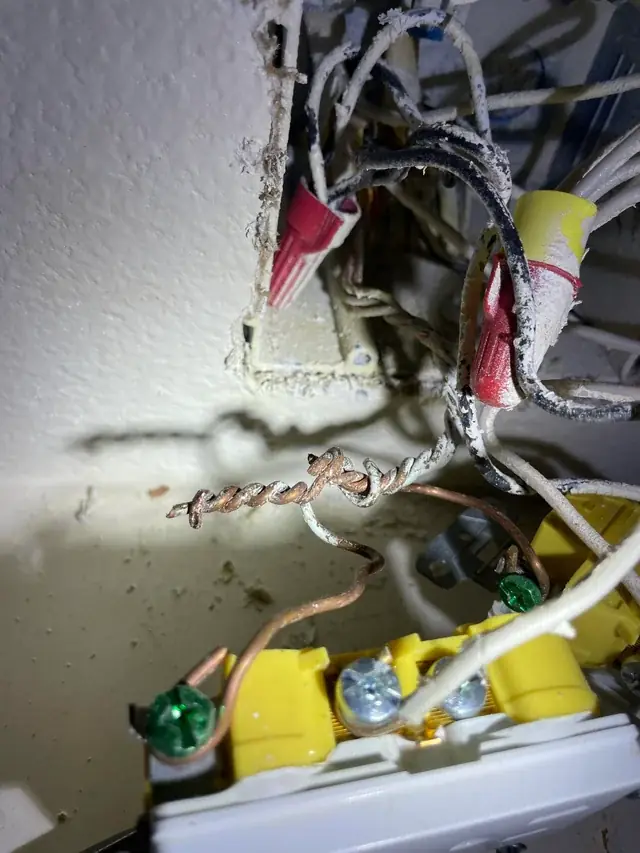
Usual causes: a GFCI elsewhere on the circuit that has tripped, a backstabbed wire that has let go, a worn device, or a neutral that has come loose and is making several outlets misbehave at once.
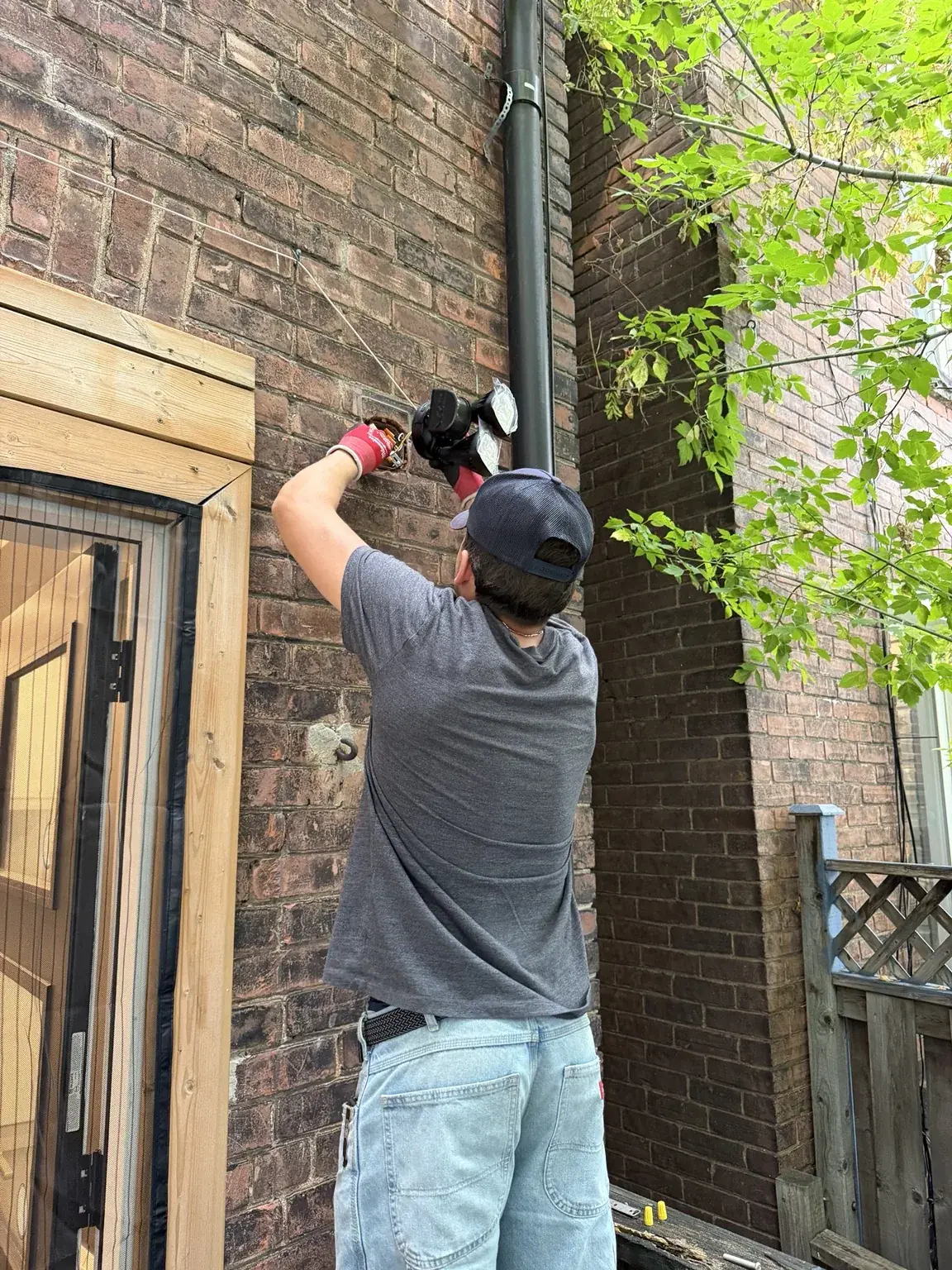
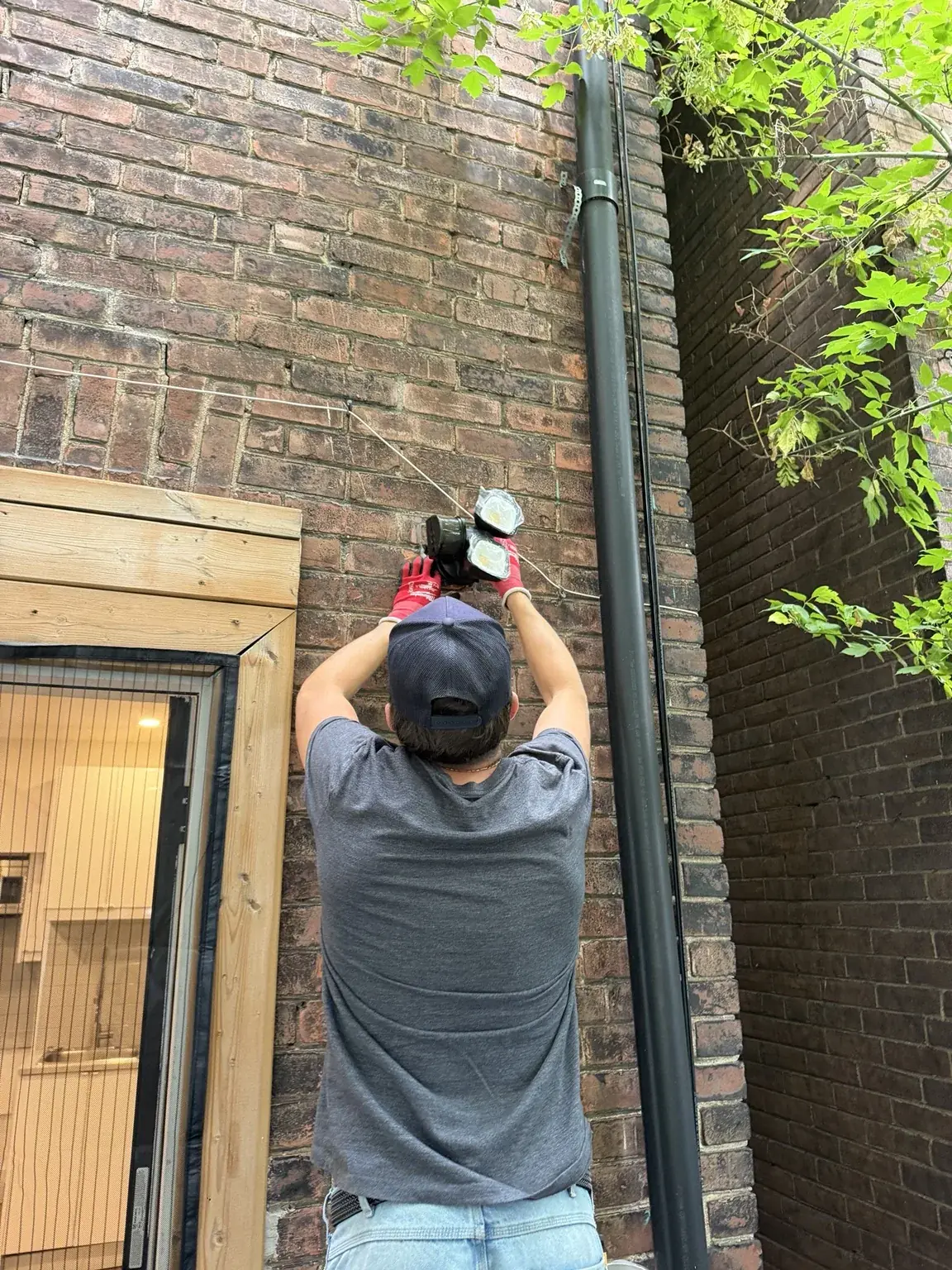
Replacements: new receptacles in homes are tamper-resistant, and GFCI protection is fitted where the Ontario Electrical Safety Code calls for it: bathrooms, kitchen counters, outdoors, garages and anywhere near water. Exterior replacements get a weatherproof in-use cover, like the one going on in the home-page photo.
What changes the scope: whether the fault is at the dead device or upstream, whether the box and wiring behind it are sound, and how many devices on the circuit show the same wear.
Light and fixture faults
Flicker, buzzing, a fixture that dims on its own or went out and stayed out, pot lights that drop one by one, an outdoor light that only works in dry weather. The same first question applies: is the problem in the fixture, the switch, the lamp, or the circuit feeding them?
Usual causes: a dimmer that was never meant for LED loads, a driver that has failed inside the fixture, a loose connection in the fixture box, a switch that has worn, or water in an exterior fixture or box.
Repair or replace: switches, dimmers and connections are repaired. A fixture with a failed integrated driver is usually replaced, because the driver is not a serviceable part. Exterior fixtures are replaced with wet-rated units and sealed to the wall.
What changes the scope: ceiling height and access, the number of fixtures on the switch, and whether the box behind the fixture is suitable for the new one.
Safety-related repairs
Some symptoms are not about convenience. A warm cover plate, a scorch mark, a buzz from the panel, a tingle from an appliance, or an outlet near a sink with no GFCI protection all point to a hazard that is better removed than monitored. These are the enquiries we move to the front of the list within whatever time we have.
- Warm or discoloured devices. Heat at a device means resistance at a connection. The device is replaced and the connections on both sides are checked.
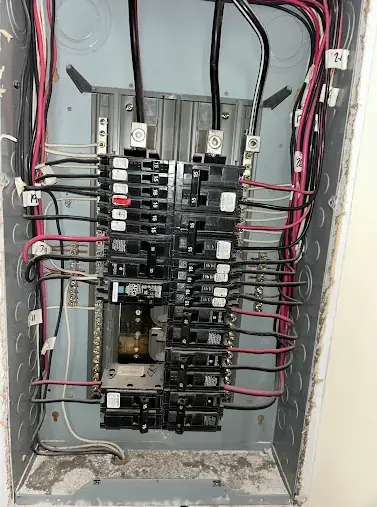
- Buzzing or crackling from the panel. Usually a loose termination or a failing breaker. Diagnosed with the cover off and the readings taken before anything is touched.
- Shocks or tingles. Often a missing or broken ground, or a neutral problem. Treated as urgent; stop using the appliance in the meantime.
- Missing GFCI protection. Added at the outlet or the breaker, depending on the circuit.
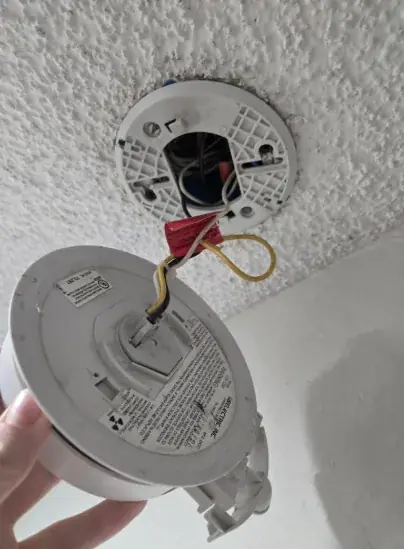
- Smoke and carbon monoxide alarms. Hardwired alarms have a replacement date printed on the back. Past it, they are replaced on the existing wiring, as in the photo.
More recent work
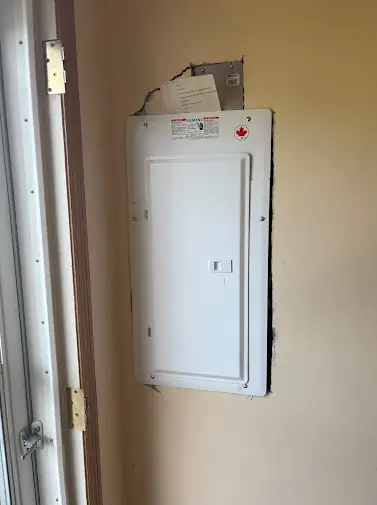
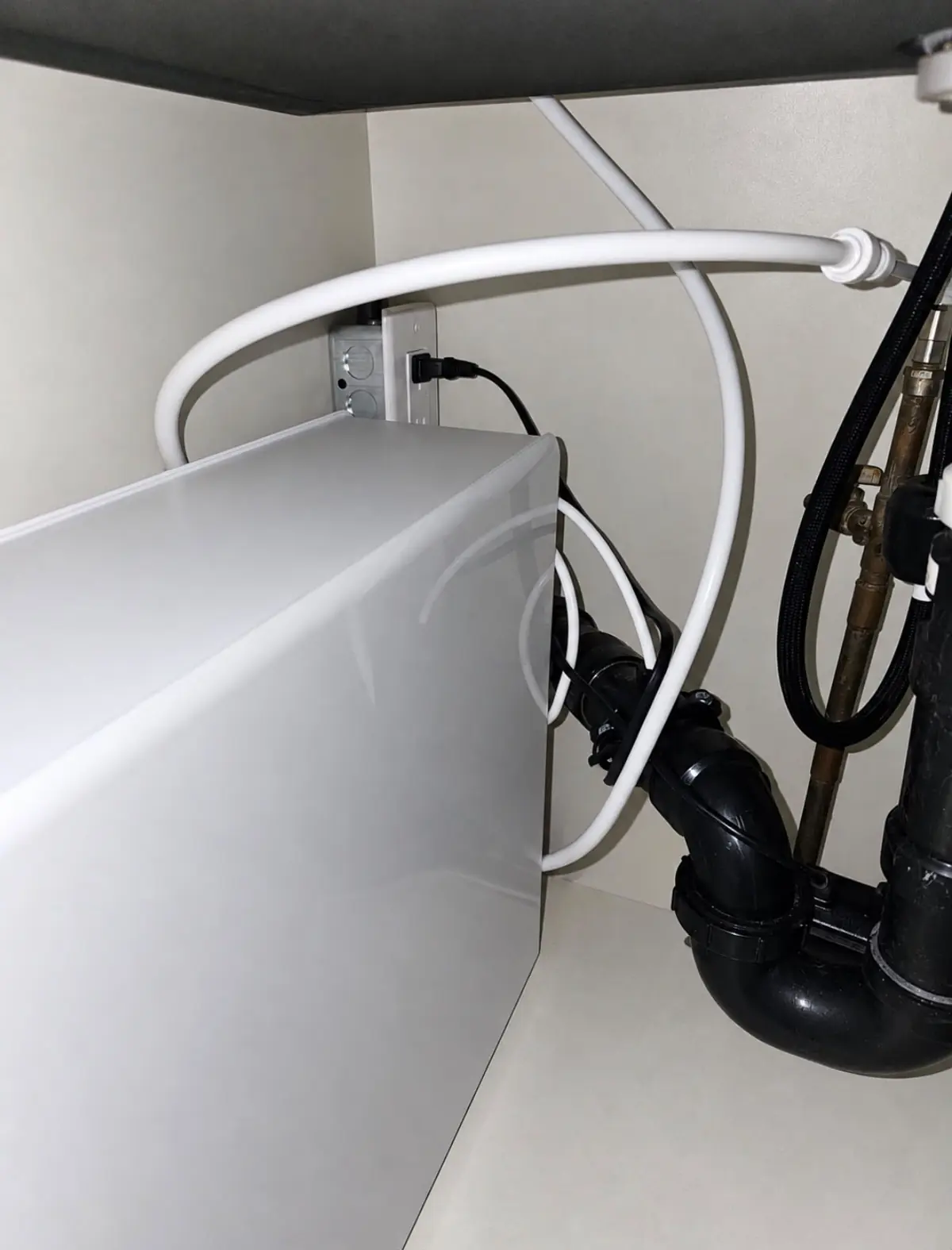
What repair and troubleshooting calls look like from the inside: what gets found behind a cover, and what the fix looks like partway through. Captions say what is visible, nothing more.
Repair questions
Will you just replace the breaker?
Only if the breaker is the fault, which the readings show. Replacing a breaker that is tripping on a real overload or short does nothing except remove the warning.
The outlet started working again on its own. Is it still a problem?
Yes. An intermittent outlet is a loose connection making and breaking contact, and each break heats it a little. It is one of the few faults that gets worse by being ignored.
Can an old fuse panel stay?
A fuse panel in good condition with correctly sized fuses is not a fault in itself. What we look for is heat, improvised fuses, and whether the service can carry what the house now draws. We say what we find; replacing the panel is a separate conversation and a separate job.
Do you repair aluminum wiring?
Connections at devices on aluminum branch wiring can be remade with the right connectors and devices rated for it. That is a repair; it is not the same as rewiring the house, and we are clear about which one a problem needs.